|
Origin, Emergence and Relationships of Pigeon Breeds: literary
analyzes versus molecular genetic clustering
The need for molecular genetic analyzes of the relationships of
pigeon breeds and grouping according to DNA similarities is also
justified by the fact that, in contrast to other domestic breeds,
the documentation would be much worse and a priori hypotheses are
therefore excluded (Pacheco et al. 2020). An underestimate of the
wealth of literature. Even though breeders often don't like to talk
about their 'secrets' when it comes to cross-breeding, crosses that
are important for the development of the breed do not remain hidden.
They are not only documented in the numerous monographs on pigeon
breeds and pigeon breeding. Breeders themselves and the breeders'
companions reported on this in the specialist magazines that emerged
after 1850, and significant changes in the breed's development were
recorded and commented on in club and breed chronicles.
First breed descriptions in Europe by Willughby
Willughby's posthumous publications in Latin in 1676 and in English
in 1678 represent a milestone in the documentation of pigeon breeds.
They were noticed and cited internationally in ornithological
literature. Seventeen breeds and breed groups are listed and briefly
described. These include giant pigeons (runts), pouters, fantail
pigeons, tumblers, owls and the carrier as the messenger pigeon of
the Turkish Empire. Also called the Light Horseman, a cross between
the groups. It emerged from the cross between a Carrier Pigeon and a
Pouter (1678, p. 182). Horseman is apparently a synonym for carrier
for Willughby. The Light Horseman is the lighter and more agile
version. In German literature he later becomes the horseman-cropper,
in French literature he was named 'cavalier'.
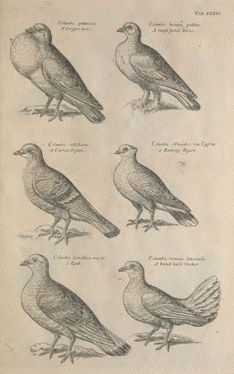
Willughby 1678 Table XXXIV
Varieties and breed groups at Bechstein around 1800.
Another milestone was Bechstein's descriptions of the domestic
pigeon in the natural history of birds in Germany (1795, 1807).
Bechstein refers, among others, to Frisch (1765) and Buffon (1772).
The domestic field and later color pigeons have over 100 different
color and pied marking varieties, including some with hoods and
light feathering on their feet. Regional breed names were not given.
In Thuringia, however, swallow pigeons would be called 'Nuremberger'
because they first came from there. He also named 13 foreign breeds
such as owls, tumblers, pouters and drummer pigeons that had come to
Germany from abroad. He only gave regional names for the Polish
pigeons, also called Indians in Germany, and the Turkish pigeons.
The latter in Germany also postal pigeon and at Willughby the
carrier from the Turkish Empire. Among the foreign pigeons one must
also include the white atlas colored ones with red crescent of the
Swiss pigeons, mentioned in 1795 with reference to Buffon. In
Thuringia the moon would otherwise only be known from the blue-black
starling necks with white 'collars' and white bars (1795, p.23).
The division of the varieties of field or color pigeons into breeds
and crosses with other breed groups
For Bechstein, field pigeons, later also called color pigeons were
still different varieties of the same breed. This changed with the
founding of the first poultry and pigeon breeding clubs after 1850.
Differences were perceived more consciously and reinforced through
breeding selection. Varieties of field or color pigeons became new
breeds. The 'foreign' races also branched out. They became richer
with variants from the countries of origin. These were further
developed in the regions of Germany according to different ideas.
Dietz and Prütz (1883) scoffed at the fact that every city wanted to
have its own race.
With such an extensive distribution, the variety of markings and
colors, and the taste for flying that develops in different
places, it is not surprising that a large number of strokes have
actually developed, but an even larger number exist in the
imagination of enthusiasts. The delusion of possessing the best
is nowhere more pronounced than in matters of hobby, because
this itself is a matter of feeling and not of reason. So all
owners of tumbler pigeons in every city believe in the
unsurpassability of their pigeons in flight, in the
impeccability of markings and coloring. Errors that appear
frequently are ultimately seen as a necessity. The belief in
this dogma ultimately led to the fact that the lovers of each
city were convinced that they had their own race and the name of
the city had to serve to designate the race. So we find almost
all the city names of the tumbler provinces represented as
names. There are Danzigers, Stettiners, Königsbergers,
Copenhageners, Stralsunders, Elbingers, Berliners, Praguers,
Viennese etc. (Dietz/Prütz 1883)
To outsiders, for example, some tumblers and highflyers with
different names differ only in nuances. Crossing between breed
groups is abundantly documented.
In 1837, Neumeister showed crossings of drummers with field or color
pigeons as 'bastard drummer pigeons'. A precursor to later German
drummer breeds and the adoption of mass and feather structures in
some varieties of the color pigeons. The beak or nasal tuft of the
Pfaffentaube was also early adopted from drumming pigeons.
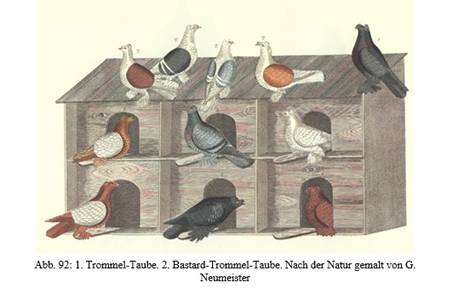 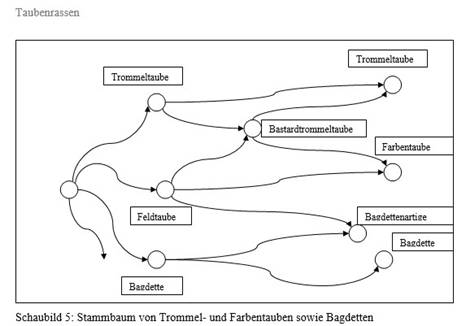
Source: Sell, Taubenrassen (2009)
The increase in breeds initially occurred without official
standards, without uniform breed names and without an umbrella
organization. In order to change that, the first breeders' day was
held in Dresden in 1869 by 20 clubs (Doll 1981, pp. 49ff). It was
agreed that the races would be divided into groups. A commission yet
to be elected should make suggestions for the names of the breeds.
In 1871, the bookseller Gustav Prütz from Stettin rushed forward and
laid the foundations. According to the group scheme given in
Dresden, he described and named breeds in his book “Species of
Domestic Pigeons”. In 1874 there was an improved second edition and
in 1878 a third one. The latter was based on the classification of
Dietz=Frankfurt a.M. Parts of it were previously included in the
revision of the 'Neumeister' by Prütz in 1876. The problems that
arose up to the founding of an umbrella organization in 1881 as the
'German Poultry Breeders' Club' are clear from Prütz's reports about
the fourth (Leipzig) Poultry Breeders' Congress in Columbia No.
28/1878, pp. 392-399.
Documented upheavals in the development of pigeon breeds.
Much more is documented about significant changes in the development
of breeds than can be shown here. Striking is the change in the
characters due to cross-breeding of French Bagdettes into English,
German and Polish long-beaks and also into the Berlin long-beaks
(Klein 1920).
In England the fancier and artist A.J. Simpson in 1909 with his
famous ‘Simpson-Magpie’ created an exaggerated artwork.
At this time, some breeders were already experimenting with crosses.
William E. Cooke outcrossed magpies with French Bagdettes. In few
years from 1908 to 1910 he created the modern English Magpie: “They
produced Magpies which were the sensation of the strain, birds such
as had never seen before. Magpie men looked at them and rubbed their
eyes in amazement. At the Palace they created quite a furor” (House
1920, quoted by Levi 1969, p. 113).
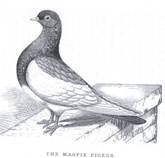 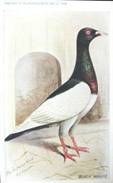 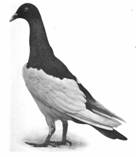 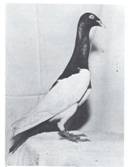
Magpie Tumbler (Lyell 1887),
Simpson Magpie 1908,
the famous £100-hen, bred by Bracey&Cooke at the Crystal Palace Show
1912 (House, 1915),
Magpie Tumbler 1938, Champion Magpie N.P.A. Show, Philadelphia 1940
(Levi 1969, p. 112)
A Berlin Lange (bottom left) depicted by Erich Klein (1920) still
appears to be a typical cross product with French Bagdettes.
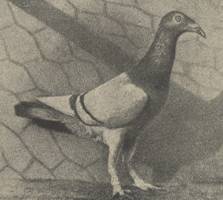 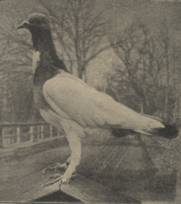
Berliner Lange
XE "Berliner Lange"
and flying type blue mapie at Klein
XE "Klein"
1920 (Source: Sell, Taubenrassen 2009).
French Bagdettes also brought about a change in the figure of the
Maltese, discussed and documented in many sources, e.g. in the book
‘Pigeon Genetics’ 2012.
Quite obvious is the difference between the Maltese Pigeon shown in
the first edition of the book by Dürigen 1886 and the new type in
the second edition from 1906. According to the Dutchman Spruijt who
studied in his youth in Dresden/Germany about that time the Dresden
fanciers crossed their Maltese with French Bagdettes.
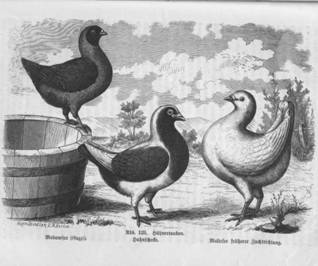
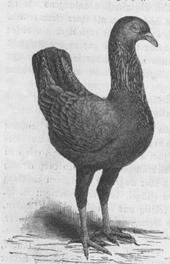
Fig. 416 from ‘Pigeon Genetics’: Modena, Hungarian and Maltese old
type at the left (Dürigen 1886), Maltese new type at the right
(Dürigen 1906)
The emergence of the English carrier, which was obscured by
misinformation for a long time, was also traced. In the new edition
of the Neumeister in 1876 (p. 37) still correctly called the
'English (straight-beaked) Bagdette'
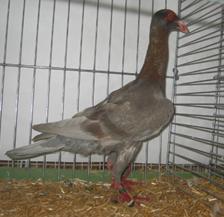 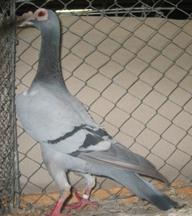
Fig. 219 French Bagdette and Fig. 220 English Carrier XE "Carrier"
(Source: Sell, Taubenrassen 2009)
The emergence of King pigeons and other new breeds was documented in
Levi 1963/1969 (p. 85), and much more. His description of the
development of the modern racing pigeon is based on the Belgian F.
Chapuis (1865). It shows the independent development in Belgium.
Essentially created from high flyers (cumulets), owls and camus.
The latter still extinct at that time, from
the description similar to the Polish pigeon shown by Buffon 1772
and Boitard/Corbié 1824.
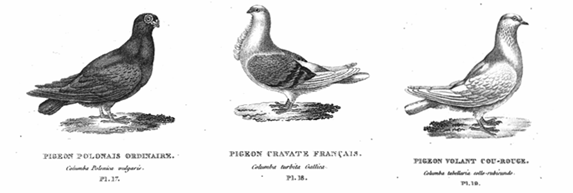
Ancestors of the modern racing pigeon, recreated from figures in
Boitard/Corbié 1824
The English Carrier at Levi explicitly represents a dead branch in
the pedigree. The possible influence shown by Dragoon and Horseman
as the descendants of the messenger pigeons in the Turkish Empire
seems to be rather exaggerated according to more recent findings.
Christian Reichenbach also comes to the same conclusion in his
comprehensive research into the development of pigeon breeds in
Europe. He writes about the completely independent breeding of the
modern racing pigeons in Belgium at the beginning of the 19th
century (Reichenbach 2000, p. 28).
Everything is proven by sources in libraries, the most extensive
special library the Nuremberg Pigeon Museum. The achievement of the
founder Karlheinz Sollfrank (Oct. 27, 1936 - April 3, 2026) will not
be forgotten.
 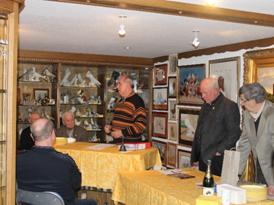
The Nuremberg Pigeon Museum
Molecular genetic analyzes of relationships.
At first glance, approaching an investigation without bias and
neglecting the literature has advantages. False and interest-driven
statements that are passed on over long periods of time are also
plentiful in the literature about pigeons. Sources must therefore
also be evaluated. However, general neglect in empirical
investigations involves the risk of not taking known or most likely
ancestors into account. Often this is not possible anyway. The
cumulets, for example, which were involved in the creation of the
modern carrier pigeon, had now become extinct; the Camus was already
only remembered in the middle of the 19th century. For cumulets, the
tippler and other longer-beaked high-flyers could be used as
substitutes in empirical analyses. But you also need starting points
for such decisions.
In one study, it was probably more or less coincidence that
Birmingham Rollers were the only representatives of the
longer-beaked high flyer pigeons (Bigi et al. 2016). Not
surprisingly for those familiar with old literature, they showed the
lowest genetic distance to racing homer pigeon after the beauty
racing homers. In the conclusions, they did not appear. As if it
were a 'statistical outlier'. Thus a significant distortion of the
empirical findings. Disdain for historical literature is accompanied
by cursory reading and thus incorrect interpretation of sources. As
in the source mentioned (p. 180), with reference to Levi, the
repeatedly false claim that the English carrier made a significant
contribution to the creation of the modern carrier pigeon around 200
years ago in England and Belgium. The fact that the modern carrier
pigeon was not created in England is clear from press reports about
racing pigeons from the time (cf. Sell 2026).
Misconceptions resulting from inadequate review of the literature
can lead to interpreting DNA findings from a biased perspective.
False statements that were thought to have been overcome are revived
and receive the stamp of scientificity. However, the general
methodology in the studies is supported by the fact that after a
long time in which the breed groups were often crossed with each
other, most of the field or color pigeons, depending on the number
of clusters, are found in the same 'cluster'. That also holds for
tumblers and pouters for their groups. Information about bilateral
similarities also allows conclusions to be drawn for breeds of
particular interest.
But, it
would be more meaningful and less confusing if the studies were more
closely linked to the current state of literature analysis.
Literature:
Bechstein, Johann
Matthäus, Gemeinnützige Naturgeschichte Deutschlands nach allen drey
Reichen, 4. Band Leipzig 1795
Bechstein, Johann
Matthäus, Gemeinnützige Naturgeschichte Deutschlands nach allen drey
Reichen. Ein Handbuch zur deutlichern und vollständigern
Selbstbelehrung besonders für Forstmänner, Jugendlehrern und
Oekonomen, Dritter Band, Mit Kupfern, Zweite vermehrte und
verbesserte Auflage, Leipzig 1807
Bigi, D.,
(University of Bologna) et al.,
Genetic investigation of Italian domestic pigeons increases
knowledge about the long-bred history of Columba livia (Aves:
Columbidae)' Italian Journal of Zoology, 2016, 173-182, Vol. 73, No.
2
Boitard P. et Corbié, Les Pigeons de volière et de colombier ou
histoire naturelle et monographie des pigeons domestiques, Paris
1824
Buffon,
Georges Louis Leclerc de, Histoire Naturelle des Oiseaux, Band IV,
Paris 1772.
Chapuis, F., Le Pigeon voyageur Belge, Verviers 1865
Dietz, H.,Frankfurt a.M., und G. Prütz-Stettin, Die Tümmler- und
Purzlertauben. Ein Beitrag zum Mustertauben=Buch, Stettin 1883
Doll, Paul, Chronik. 100 Jahre BDRG. Geschichte der Deutschen
Rassegeflügelzucht, im Selbstverlag, Reutlingen 1981, S. 49ff.
Dürigen, B.,
Geflügelzucht nach ihrem jetzigen rationalen Standpunkt, Berlin 1886
Dürigen, B.,
Geflügelzucht, 2. Aufl., Berlin 1906.
Frisch, Johann
Leonhard, Vorstellung der Vögel in Deutschlands und beyläuffig auch
einiger fremden, mit ihren Farben…Die Zehnte Klasse, die Arten der
Wilden, Fremden und Zahmen oder Gemeinen Tauben, Berlin 1763.
Levi, W., The
Pigeon, Levi Publishing, Sumter 1963/1969
Neumeister, G.,
Das Ganze der Taubenzucht oder vollständige auf vielseitige
Erfahrungen gegründete Anweisung, wie Tauben wie Tauben zu halten
und zu warten sind…, Weimar 1837
Neumeister, G.,
Das Ganze der Taubenzucht., 3. Aufl. von Gustav Prütz XE "Prütz"
, Weimar 1876. Unveränderter Nachdruck Verlag Neumann-Neudamm 1988.
Pacheco, George,
und Hein van Grouw, Michael D. Shapiro, Marcus Thomas P. Gilbert und
Filipe Garrett Vieira, Darwin’s Fancy Revised: An Updated
Understanding of the Genomic
Constitution of Pigeon Breeds, GenomeBiol.Evol. 12(3):136–150
doi:10.1093/gbe/evaa027 February 13, 2020
Prütz, Gustav,
Der vierte (Leipziger) Geflügelzüchter-Congreß, Columbia Nr.
28/1878, S. 392-399.
Prütz, Gustav,
Die Arten der Haustaube. Nach dem Entwurfe der Delegierten des I.
Deutschen Geflügel-Tages beschrieben und herausgegeben von Gustav
Prütz in Stettin. Dritte umgearbeitete und mit einem Anhang „die
Krankheiten der Tauben“ vermehrte Auflage, Leipzig 1878.
Reichenbach,
Christian, Domestikation und Rassenbildung. In: Erich Müller
(Hrsg.), Alles über Rassetauben. Band 1, Entwicklung, Haltung,
Pflege, Vererbung und Zucht, Reutlingen 2000, S. 20-61.
Sell, Axel,
Faktencheck zur Entstehungsgeschichte der modernen Brieftaube, Die
Brieftaube 143 (2026), Nr. 1, S. 24f.
Sell, Axel,
Taubenrassen. Entstehung, Herkunft, Verwandtschaften. Faszination
Tauben durch die Jahrhunderte, Achim 2009.
Sell, Axel, und
Sell, Jana, Genetics of the Domestic Pigeon, Achim 2025
Sell, Axel, und
Sell, Jana, Genetik der Haustaube, Achim 2025
Willughby, F., Ornithologia, Libres Tres, Londini MDCLXXVI (1676).
Willughby, F., The Ornithology in Three Books. Translated into
English, and enlarged with many Additions throughout the whole work
by John Ray, Fellow of the Royal Society, London 1678.
|
